

How much internet speed do you really need?
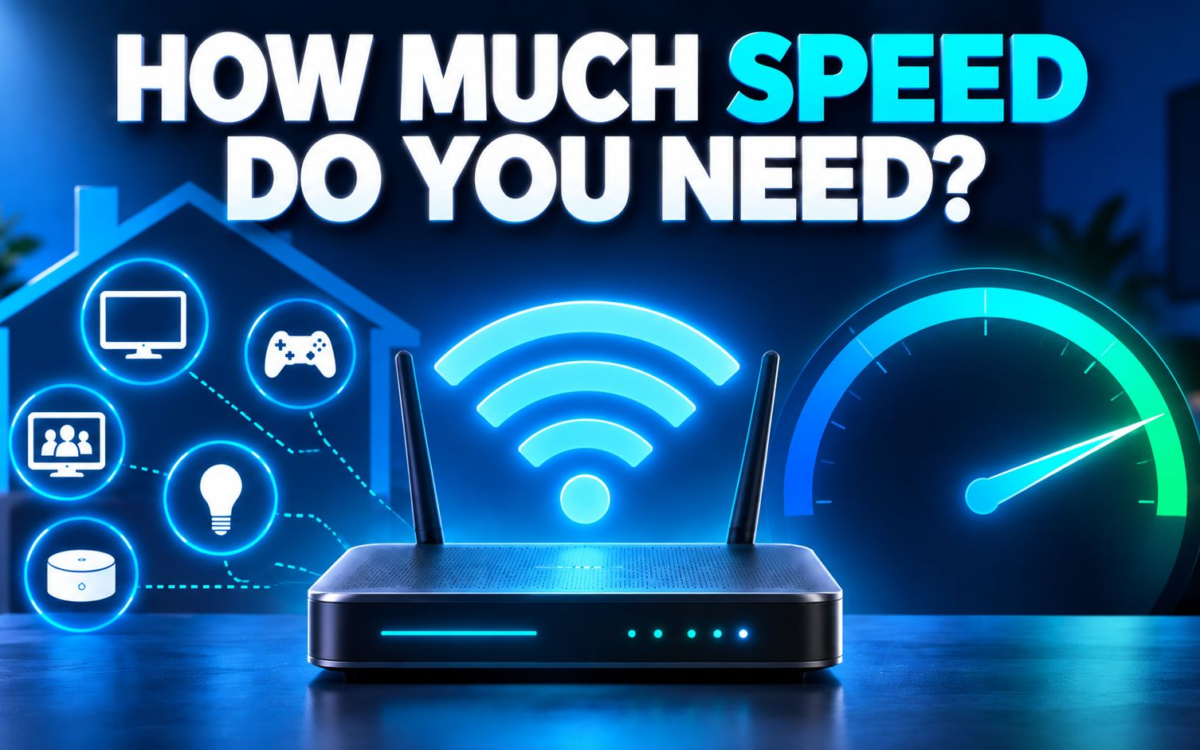
Internet speed is usually measured in Mbps, which means megabits per second. This number tells you how much data your connection can move in one second.
The higher the number, the more activity your connection can generally handle at the same time.
There are three main terms worth understanding:
- Download speed: how quickly information reaches your device. This affects streaming, browsing, downloading files and watching videos.
- Upload speed: how quickly information leaves your device. This matters for video calls, uploading files, cloud backups and livestreaming.
- Latency: how long it takes data to travel from your device to a server and back. Lower latency is especially important for gaming and video calls.
A fast connection is not only about having a high Mbps number. Your experience also depends on Wi-Fi coverage, the number of connected devices, your modem or router, network congestion and the type of activity happening at the same time.
How much speed do you need?
The right amount depends more on how your household uses the internet than on the number of people alone.
Light use — around 50–100 Mbps
This may be enough for a small household that mainly uses the internet for:
- Web browsing
- Social media
- Music streaming
- One or two HD video streams
- Occasional video calls
This type of connection can work well when only a few devices are active at the same time.
Moderate use — around 100–300 Mbps
This range can be a better fit for households with several connected devices and regular daily use such as:
- Multiple HD or 4K streams
- Video calls
- Remote work
- Online classes
- Casual gaming
- Smart TVs and smart-home devices
- Regular downloads
For many homes, this range provides enough flexibility for several people to be online at once.
Heavy use — around 300–500 Mbps
Households with more demanding activity may benefit from additional capacity.
Examples include:
- Several 4K streams at the same time
- Frequent online gaming
- Large downloads
- Multiple people working from home
- Cloud backups
- Security cameras
- Many connected devices
The main advantage here is not that one website suddenly loads five times faster. It is that more activities can happen simultaneously without competing as much for bandwidth.
Very heavy use — 500 Mbps to 1 Gbps or more
Higher-speed plans may make sense for homes with:
- Large families
- Many connected devices
- Multiple gamers
- Content creators
- Frequent large file transfers
- Heavy cloud usage
- Several people streaming and working online at the same time
Gigabit speeds can provide substantial capacity, but not every household needs them.
Tags:
#InternetSpeed #Mbps #HomeInternet #WiFiTips #Connectivity #InternetTips #TechTips #HomeNetwork